
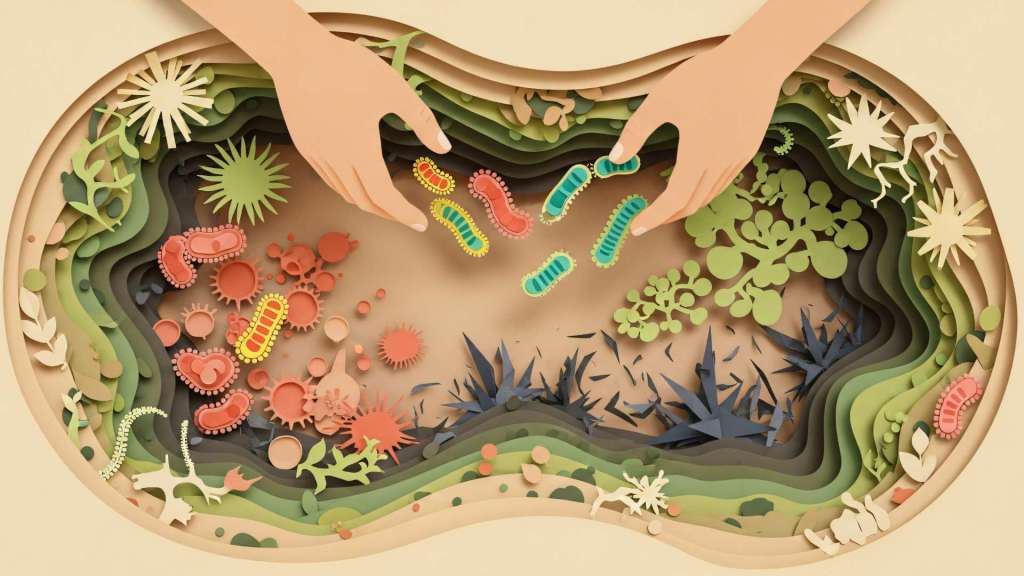
Hormones don’t work in isolation — and neither does your gut. These two systems are deeply connected, constantly communicating and influencing one another. For women in midlife, this connection becomes especially important as hormonal shifts begin to affect energy levels, mood, metabolism, and body composition. When gut health is compromised, hormonal balance often follows.
One of the gut’s most important — and often overlooked — roles is its involvement in estrogen metabolism. A specific group of gut bacteria, known as the estrobolome, helps regulate how estrogen is processed and eliminated from the body. When the microbiome is balanced, estrogen is cleared efficiently. When it’s disrupted, estrogen may be reabsorbed instead of eliminated, contributing to symptoms such as bloating, breast tenderness, mood swings, and stubborn weight gain.
Mood is another area profoundly influenced by gut health. The gut-brain axis is a two-way communication system connecting the digestive tract and the nervous system through neural, hormonal, and immune pathways. When the gut is inflamed or sluggish, the nervous system remains in a heightened state of stress. This can show up as anxiety, irritability, low mood, or difficulty concentrating — symptoms many women attribute to aging or external stress rather than digestion.
Weight changes during midlife are also closely tied to gut health. Many women find themselves eating well and exercising regularly, yet the scale refuses to budge. An imbalanced gut can impair nutrient absorption, disrupt blood sugar regulation, and increase systemic inflammation. These signals tell the body it’s under stress, encouraging fat storage as a protective response. This isn’t a lack of discipline — it’s physiology.
Blood sugar balance plays a key role here as well. When digestion is inefficient, blood sugar spikes and crashes become more frequent, driving cravings and energy dips. Supporting the gut helps improve insulin sensitivity and steadies blood sugar, which often leads to more consistent energy and reduced cravings throughout the day.
The encouraging part is that when gut health improves, many of these challenges begin to resolve together. As digestion becomes more efficient, inflammation decreases, hormones rebalance more naturally, and metabolic processes function more smoothly. Women often notice improved mood, clearer thinking, better sleep, and a renewed sense of control over their bodies.
Importantly, supporting gut health does not require restriction or deprivation. A gut-centered approach focuses on nourishment rather than elimination. Instead of cutting out everything you enjoy, you learn which foods support your body and which ones don’t — based on your own experience. Food becomes information rather than a source of stress.
When women shift from trying to control their bodies to supporting them, something powerful happens. Trust begins to rebuild. The body feels safer, more responsive, and more cooperative. Weight becomes less of a battle, mood becomes steadier, and confidence grows.
Gut health is not about perfection. It’s about alignment — working with your body’s natural rhythms and needs, especially during times of transition.
👉 Support your hormones at the root. Start the 28-Day Gut Health Meal Plan and work with your body instead of against it.
